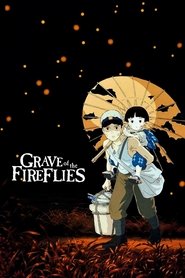
Grave of the Fireflies follows orphaned siblings Seita and Setsuko during Japan’s World War II bombings. The movie is a visceral gut punch that uses beautiful animation to deliver a message about the destructive, horrific consequences of war. Throughout the film, viewers witness the struggle of two children as they try to survive in a hostile world and see the haunting effects it has on their bodies and souls. In the end, Grave of Fireflies is a heart-wrenching masterpiece that forces us to confront the cost of armed conflict.
CLICK HERE⭳⭳⭳👉🏼_Watch Grave of the Fireflies 1988 English Subtitles_
Review
“Grave of the Fireflies”: A Heart-Wrenching Tale of War, Loss and Resilience
George Orwell once said that “the essence of being human is that one does not seek perfection.” And indeed, perfection is not what we find in Isao Takahata’s 1988 animated masterpiece “Grave of the Fireflies.” What we find instead is a brutally honest portrayal of the devastating consequences of war on innocent civilians, particularly children. Based on a semi-autobiographical novel by Akiyuki Nosaka, the film tells the story of two siblings struggling to survive in Japan during World War II. But it is much more than a war film. It’s a powerful commentary on human nature, morality, and social responsibility.
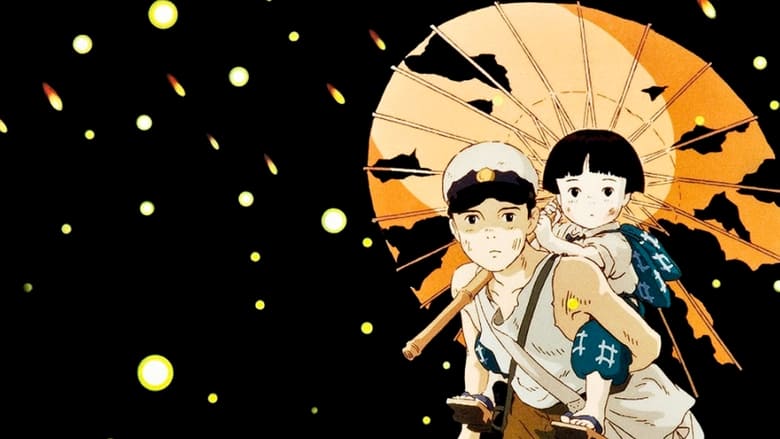
Set in Kobe in 1945, “Grave of the Fireflies” begins with a haunting scene: fourteen-year-old Seita dies alone in a railway station. His spirit then joins that of his little sister Setsuko, who had died earlier during the firebombing of their city. The rest of the film is a flashback that traces their journey towards this tragic end. We see Seita and Setsuko trying to cope with hunger, homelessness, illness, and despair in a world gone mad. We witness their bond as siblings grow stronger despite all odds. And we feel their pain as they gradually lose everything they have ever known.
At its core, “Grave of the Fireflies” is about innocence lost. It’s about how war takes away not only lives but also childhoods. The film contrasts the sunny days before the bombing with the dark nights after it. It shows how ordinary people become desperate and selfish when faced with extreme conditions. It portrays how children become feral and vulnerable when forced to fend for themselves. And it asks us whether or not we as individuals or societies have any obligation to prevent such tragedies from happening.
Takahata’s directorial style is what makes “Grave of the Fireflies” so effective. He eschews sentimentality and melodrama in favor of simplicity and realism. He lets his characters, particularly Seita and Setsuko, speak for themselves through their actions, expressions, and silences. He uses naturalistic colors, sounds, and backgrounds to convey a sense of time and place. And he employs animation not as a means of escaping reality but as a way of enhancing it. The result is a film that feels both authentic and timeless.
Of course, no film can succeed without talented actors bringing the characters to life. In the Japanese original version of “Grave of the Fireflies,” Tsutomu Tatsumi voices Seita with understated intensity while Ayano Shiraishi imbues Setsuko with adorable charm. Their performances capture the essence of brotherly love and sisterly affection in a way that transcends language barriers.
“Grave of the Fireflies” was not an immediate commercial success when it was first released in Japan. It faced stiff competition from more mainstream anime films like “My Neighbor Totoro,” also directed by Takahata’s colleague Hayao Miyazaki. But over time, its reputation grew as audiences around the world discovered its power. It has been recognized not only as one of the best anime films ever made but also as one of the greatest war films regardless of genre.
The film has won numerous awards and accolades over the years, including but not limited to Best Animated Film at Chicago International Children’s Film Festival, Best Art Direction at Mainichi Film Award and Kinema Junpo Award for Best Animation Film. Its influence can be seen in works ranging from Steven Spielberg’s “Saving Private Ryan” to Wes Anderson’s “Isle of Dogs.” And its impact on popular culture is undeniable: from fan art to memes to parodies (such as “The Simpsons” episode “Bart’s Inner Child”), “Grave of the Fireflies” remains a touchstone for anyone who appreciates the emotional power of cinema.
Cinematographically, “Grave of the Fireflies” is a marvel. The film’s use of light and shadow is particularly striking. It makes us feel like we are watching real people in real places rather than drawings on a screen. The sequence where Seita and Setsuko release fireflies into the night sky is especially breathtaking, as it symbolizes both hope and transience. The score by Michio Mamiya is another standout feature of the film. Its minimalist melodies complement the visuals perfectly, creating an atmosphere that is both haunting and uplifting.
Editing wise, “Grave of the Fireflies” excels in its pacing and structure. The film never drags or rushes but instead moves at a pace that allows us to fully immerse ourselves in its world. It balances moments of joy with moments of sorrow, without ever becoming mawkish or manipulative. And its framing devices (the opening and closing scenes) give it a sense of closure that is both satisfying and devastating.
But perhaps what makes “Grave of the Fireflies” truly special is its relevance to our times. Though set over 75 years ago, it speaks directly to our own era’s issues: war, poverty, displacement, trauma, loss, mental health. It reminds us that history repeats itself unless we learn from it. It challenges us to be more empathetic towards those who suffer in silence around us. And it inspires us to cherish every moment we have with our loved ones while we still can.
In conclusion, “Grave of the Fireflies” is a masterpiece that should be seen by anyone who cares about cinema as an art form and as a medium for social commentary. It’s not an easy film to watch or digest but it’s one that will stay with you long after the credits roll. As Orwell also said, “To see what is in front of one’s nose needs a constant struggle.” “Grave of the Fireflies” reminds us of what is in front of our noses and asks us to struggle with it. It’s a film that demands our attention, our respect, and our tears.
Technical Data
- Runtime : 89
- Release : 1988-04-16
- Genre : Animation, Drama, War
- Cast : Tsutomu Tatsumi as Seita (voice), Ayano Shiraishi as Setsuko (voice), Yoshiko Shinohara as Mother (voice), Akemi Yamaguchi as Auntie (voice), Kozo Hashida as Obayashi Chairman (voice)
- Crew : Isao Takahata as Screenplay, Isao Takahata as Director, Takeshi Seyama as Editor, Kuniyuki Ishii as Key Animation, Tooru Hara as Producer
- Popularity 0.6
- Budget : $3,700,000
- Revenue : $516,962
- Company : Studio Ghibli
- Summary : In the final months of World War II, 14-year-old Seita and his sister Setsuko are orphaned when their mother is killed during an air raid in Kobe, Japan. After a falling out with their aunt, they move into an abandoned bomb shelter. With no surviving relatives and their emergency rations depleted, Seita and Setsuko struggle to survive.
- Tagline :
