“The Roommate” is a psychological thriller about a college freshman, Sara, who becomes roommates with a seemingly innocent and friendly girl named Rebecca. However, as their friendship develops, Rebecca’s true obsessive and dangerous personality is revealed, leading to a series of terrifying events. The movie is like a rollercoaster ride of tension and unpredictability, with sharp turns and sudden drops that keep the audience on the edge of their seats until the very end.

CLICK HERE⇣⇣⇣📽️_Watch The Roommate 2011 English Subtitles_
Review
The Power of Vulnerability in “The Roommate”
Have you ever had a roommate who became more than just a mere cohabitant? Someone who seemed to know you too well, yet not at all? Someone whose presence, at first reassuring and exciting, gradually turned suffocating and alarming? Someone whose obsession with you drove them to cross boundaries that should never be crossed?
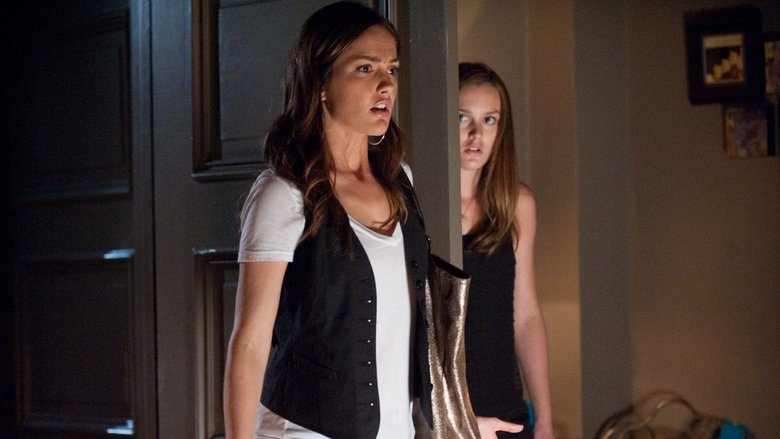
“The Roommate” is a psychological thriller that explores the dark side of human connection, the fragile line between intimacy and intrusion, and the perilous consequences of ignoring warning signs. Directed by Christian E. Christiansen and written by Sonny Mallhi, “The Roommate” stars Minka Kelly as Sara Matthews, a naive and talented design student who lands a scholarship at an elite college in Los Angeles. Sara’s blissful optimism soon collides with reality when she meets her roommate, Rebecca Evans, played by Leighton Meester.
Rebecca is not your typical roommate. She has a troubled past, a hidden agenda, and an unhealthy attachment to Sara that borders on obsession. At first, Sara ignores the red flags that flicker around Rebecca like warning signs. She tries to please her new friend with kindness and patience, unaware that Rebecca’s affection is tainted by jealousy and resentment towards anyone who threatens her idealized image of Sara.
As the story unfolds, we witness how vulnerable both Sara and Rebecca are in their own ways. Despite her talent and ambition, Sara struggles with homesickness, insecurity about her relationships with men, feeling inferior to her rich classmates, and being bullied by an arrogant fashionista played by Alyson Michalka. Despite her facade of confidence and control, Rebecca struggles with trauma from her past involving abandonment by her father (who left her dolls as substitutes) and rejection from previous roommates (whose pictures she defaces).
In Brené Brown’s research on vulnerability as a key factor in authentic connections between people, we see how both Sara and Rebecca exemplify the paradox of vulnerability. On one hand, vulnerability is the courage to show up as our true selves, flaws and all, and to risk rejection or criticism in order to connect with others on a deeper level. On the other hand, vulnerability is also the trigger for fear, shame, and unworthiness when we perceive ourselves as not good enough or deserving of love and belonging.
Sara embodies the first aspect of vulnerability by being open-minded, generous, honest, and empathetic towards Rebecca despite her odd behavior. Sara believes that she can help Rebecca heal from her past traumas by being a good friend and role model. Sara also opens up to her love interest Stephen (played by Cam Gigandet) about her insecurities and fears about intimacy and trust. Sara shows that vulnerability is a strength that enables us to grow, learn, and connect more deeply with ourselves and others.
Rebecca embodies the second aspect of vulnerability by being defensive, manipulative, possessive, and vengeful towards Sara when she perceives Sara as a threat to her identity or happiness. Rebecca believes that she can only feel safe and worthy by controlling Sara’s life and eliminating anyone who stands in her way. Rebecca also sabotages her chances with a secret admirer named Tracy (played by Danneel Harris) because she sees Tracy’s kindness as a challenge to her dominance over Sara. Rebecca shows that vulnerability is a weakness that isolates us from others and leads us down a path of self-destruction.
The tension between these two forms of vulnerability creates the core conflict of “The Roommate” as we see how each character tries to cope with their inner demons while facing external pressures from peers, authority figures (including Billy Zane as an art professor), family members (including Frances Fisher as Sara’s mother), and fate itself. The plot twists keep us on edge as we wonder how far Rebecca will go to get what she wants and how Sara will survive the escalating threats that Rebecca poses.
The acting in “The Roommate” is solid, with Meester delivering a chilling performance as a disturbed young woman whose mask of sanity gradually slips away. Kelly also shines as a sympathetic and believable protagonist who we root for even as we cringe at some of her choices. The supporting cast adds depth and humor to the story, with Michalka providing a sharp-tongued foil to Sara’s kindness and Gigandet offering a sensitive portrayal of a guy who genuinely cares for Sara but has his own wounds to heal.
The score and cinematography add to the atmosphere of claustrophobia and dread, with dark colors, tight angles, and haunting melodies creating a sense of foreboding that builds up to the explosive climax. The soundtrack features several catchy pop songs that reflect the youth culture of LA but also serve as ironic commentary on the characters’ predicaments.
Overall, “The Roommate” may not be an award-winning masterpiece or a groundbreaking genre-definer, but it is an engaging and thought-provoking movie that explores some universal themes of human nature in an entertaining and enriching way. It reminds us that vulnerability is not just about being soft or weak, but also about being strong enough to face our fears, embrace our imperfections, ask for help when we need it, set healthy boundaries when necessary, and respect others’ boundaries as well. It invites us to reflect on our own relationships and see how much vulnerability we are willing to offer or receive without losing ourselves or hurting others.
In conclusion, “The Roommate” invites us to stay curious about ourselves and others in spite of our fears or expectations. As Brené Brown says: “Courage starts with showing up and letting ourselves be seen.” Whether you watch “The Roommate” alone or with someone else (but hopefully not a creepy roommate), you can use it as a mirror that reflects the power of vulnerability in all its complexity and beauty.
Technical Data
- Runtime : 91
- Release : 2011-02-04
- Genre : Thriller, Drama, Horror
- Cast : Leighton Meester as Rebecca Evans, Minka Kelly as Sara Matthews, Cam Gigandet as Stephen, Aly Michalka as Tracy, Danneel Ackles as Irene
- Crew : Beau Marks as Executive Producer, Jon Gary Steele as Production Design, Phil Parmet as Director of Photography, Doug Davison as Producer, Roy Lee as Producer
- Popularity 15.992
- Budget : $16,000,000
- Revenue : $52,545,707
- Company : Screen Gems, Vertigo Entertainment
- Summary : When Sara, a young design student from Iowa, arrives for college in Los Angeles, she is eager to fit in and get to know the big city. Her wealthy roommate, Rebecca, is more than eager to take Sara under her wing and show her the ropes. The two become close, but when Sara begins to branch out and make more friends on campus, Rebecca becomes resentful. Alarmed, Sara moves in with her new boyfriend, causing Rebecca’s behavior to take a violent turn.
- Tagline : 2,000 colleges. 8 million roommates. Which one will you get?
